
Before the body can rise, it must first learn to root.
There is a reason so many yoga sequences return again and again to the feet. Long before a posture asks anything of the arms or spine, it asks the feet to press down, to find the earth, to remember gravity as an ally rather than a force to fight. This is grounding — and no family of postures teaches it more directly than the standing poses.
Chief among them is Veerabhadrasana, or Warrior Pose — a posture built not on flexibility or flair, but on presence. Let's look at what it teaches, how to practice it with intention, and which other standing poses belong in a grounded practice.
What Is Veerabhadrasana (Warrior Pose)?
Veerabhadrasana takes its name from Veerabhadra, a fierce warrior born of Lord Shiva's grief and rage — summoned, according to legend, to avenge the loss of his beloved Sati. The pose channels that same energy: rooted, resolute, unwavering.
But the strength of Veerabhadrasana was never meant for external battles. In the practice, the warrior's fight is turned inward — toward doubt, distraction, and the habits that pull us off center. To stand in Warrior Pose is to stand ready, not for conflict, but for presence.
There are three variations, each building on the same grounded foundation:
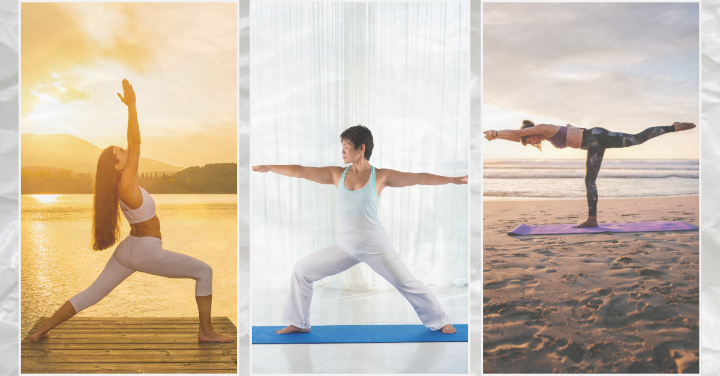
Veerabhadrasana I — a forward-facing warrior, hips squared, arms reaching skyward.
Veerabhadrasana II — hips and arms opening wide, gaze extended over the front hand.
Veerabhadrasana III — a balancing warrior, the back leg lifting parallel to the earth.
How to Practice Veerabhadrasana I
Step one foot back into a wide stance, back foot angled slightly outward for stability.
Square the hips toward the front of the mat, resisting the pull to twist open.
Bend the front knee directly over the ankle, keeping the back leg strong and active.
Press firmly through both feet, feeling the earth push back as much as you push down.
Raise the arms overhead, shoulders relaxed away from the ears.
Hold for 5–8 steady breaths, then release and repeat on the other side.
The instruction worth remembering: the strength of this pose lives in the legs and feet, not the arms. Everything above the hips simply extends what is already rooted below.
The Benefits of Veerabhadrasana
Builds strength in the legs, glutes, and core, forming a stable base for more advanced postures.
Improves stamina and focus, since holding the pose demands sustained effort and attention.
Opens the chest and shoulders, counteracting the forward-hunched posture of daily life.
Encourages emotional resilience, as the pose is often taught alongside its mythology of transforming grief into purpose.
Sharpens mental steadiness, training the mind to stay present under physical demand.
Grounding poses like this one work on two levels at once. The legs grow stronger. The mind, almost as a side effect, grows quieter.
Common Mistakes to Avoid
Letting the front knee collapse inward. Keep it tracking directly over the ankle.
Losing the back leg's strength. A passive back leg undermines the entire foundation of the pose.
Hunching the shoulders toward the ears. Draw them down and back, even as the arms reach high.
Rushing the transition. Warrior Pose rewards patience — the stance is meant to be built, not dropped into.
Beyond Warrior Pose: Other Standing Poses Worth Exploring
Once Veerabhadrasana feels steady, a wider world of standing postures opens — each one reinforcing the same principle: a strong base makes everything above it possible.
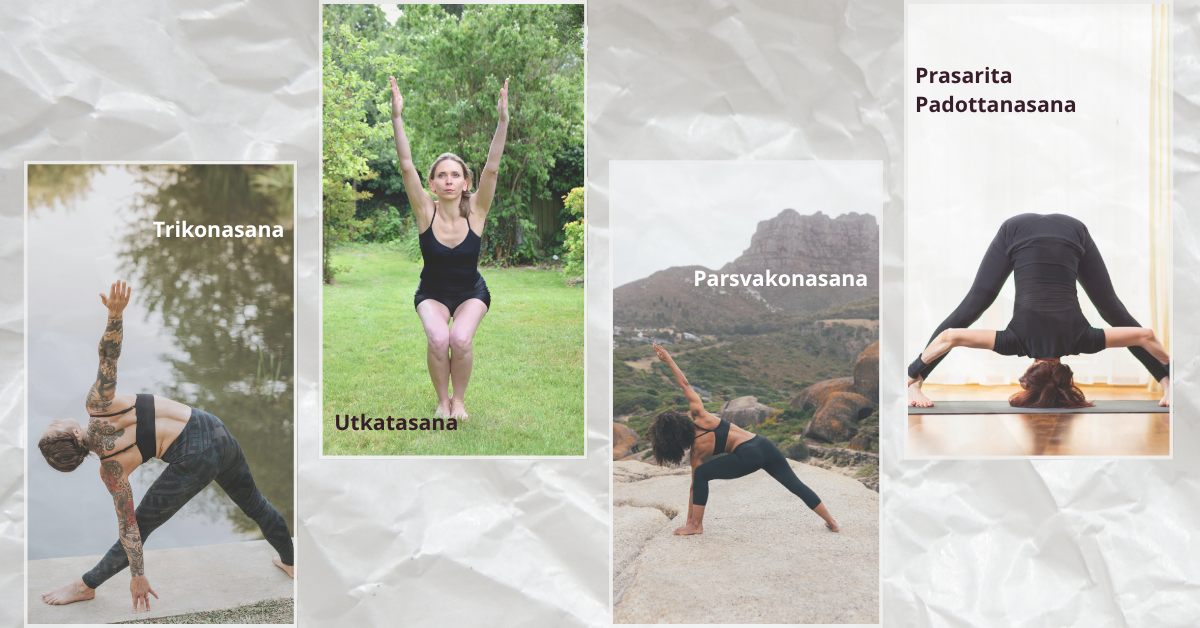
- Trikonasana (Triangle Pose) A pose of lengthening and opening, Triangle asks the body to extend fully to the sides while the legs remain firmly planted. It builds grounded flexibility through the hips and hamstrings.
- Parsvakonasana (Extended Side Angle Pose) Combining a deep lunge with a long diagonal stretch through the side body, this pose asks for both strength in the legs and openness through the spine.
- Utkatasana (Chair Pose) Often called the "fierce pose," Chair Pose grounds through the heels while building heat and endurance in the thighs — a quiet test of will disguised as a simple squat.
- Prasarita Padottanasana (Wide-Legged Forward Fold) A grounding pose turned inward, this posture combines a strong stance with a surrendering fold, balancing effort with release.
The Deeper Lesson of Grounding
In yogic philosophy, grounding is never about staying small or still. It is the condition that makes movement possible at all. A tree cannot bend gracefully in the wind without roots holding firm below. A warrior cannot act with clarity without first finding solid ground beneath their feet.
Veerabhadrasana asks the same of the practitioner. Root down first. Let the legs do the quiet, unglamorous work of holding steady. Only then let the arms rise, the chest open, the gaze lift toward what's ahead.
Grounding is not the opposite of growth. It is what growth stands on.
Ready to move beyond the poses and into the deeper wisdom that shapes them?
Explore the Beyond Asana course and take the next step in your practice.