
Some strength announces itself. Other strength simply holds you up when nothing else can.
There is a particular kind of resilience that yoga builds slowly, without ever demanding applause. It lives not in the dramatic arc of a backbend or the stillness of a balance pose, but in the long muscles that run the length of the spine — the ones that hold you upright through a difficult meeting, a long day, a hard year. These are the muscles that back-strengthening poses are built to serve.
Foremost among them is Shalabhasana, or Locust Pose — a posture that asks for nothing but effort, and gives back something closer to backbone, both literally and otherwise. Let's look at what it teaches, how to practice it well, and which other back-strengthening poses belong in a resilient practice.
What Is Shalabhasana (Locust Pose)?
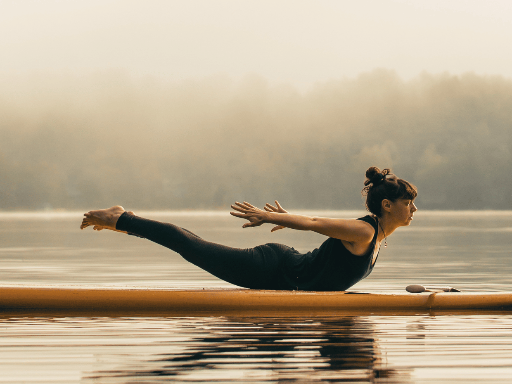
Shalabhasana takes its name from the Sanskrit Shalabha, meaning locust or grasshopper, and Asana, meaning pose. Lying face down, the practitioner lifts the chest, arms, and legs away from the earth, resembling the light, hovering posture of the insect it's named for.
Unlike backbends that arch from a kneeling or standing base, Locust Pose builds its lift entirely from the strength of the back body — no hands to push from, no momentum to borrow. This is precisely what makes it so effective. Shalabhasana isolates the very muscles most of modern life allows to go quiet: the erector spinae, the muscles that hold the spine long and upright against the constant pull of gravity, screens, and slouched shoulders.
In the yogic view, the spine is more than a structure. It is considered the central channel through which energy moves, the axis around which the rest of the body organizes itself. To strengthen it is to steady far more than posture.
How to Practice Shalabhasana
Lie face down on the mat, arms alongside the body, palms facing down, forehead resting gently on the floor.
Engage the legs and glutes, pressing the tops of the feet into the mat as a starting point of activation.
Lengthen through the crown of the head before lifting, creating space in the neck rather than compressing it.
Lift the chest, arms, and legs simultaneously, keeping the gaze down and the neck neutral.
Reach actively through the fingertips and toes, rather than simply raising the limbs.
Hold for 3–5 breaths, keeping the breath steady rather than held.
Lower slowly and rest, allowing the back muscles to fully release before repeating.
The instruction worth remembering: Locust Pose is not measured by height. A low, well-engaged lift will always strengthen the spine more effectively than a high one built on strain through the lower back.
The Benefits of Shalabhasana
Strengthens the entire posterior chain, including the lower back, glutes, and hamstrings.
Improves posture, directly counteracting the forward hunch of desks, phones, and daily fatigue.
Supports spinal health, building the muscular support that protects the discs and joints of the back.
Builds stamina and willpower, since the pose requires sustained effort with no external support.
Encourages quiet resilience, training the body to hold steady through sustained, unglamorous effort — a lesson that rarely stays confined to the mat.
Locust Pose is one of the few postures where the benefit and the practice are nearly identical. The strength it builds in the spine is the same strength it asks of the practitioner in the moment: hold, breathe, and don't collapse.
Common Mistakes to Avoid
Craning the neck upward. Keep the gaze down and the back of the neck long to avoid compression.
Lifting from the lower back alone. Engage the glutes and hamstrings so the effort distributes across the whole posterior chain.
Holding the breath. Steady breathing keeps the pose from becoming a battle rather than a practice.
Chasing height over engagement. A shorter lift with full-body activation builds more strength than a higher one built on momentum.
Beyond Locust Pose: Other Back-Strengthening Poses Worth Exploring
Once Shalabhasana feels steady, a wider practice of spinal strength opens — each posture reinforcing the same principle: a strong back holds up everything else.
Bhujangasana (Cobra Pose) A gentler introduction to spinal extension, Cobra builds strength through the upper back while the hands offer light support — a natural complement to Locust Pose's hands-free effort.
Salabhasana Variations (Half Locust) Lifting one leg at a time isolates each side of the back individually, useful for identifying and correcting imbalances before progressing to the full pose.
Ardha Shalabhasana to Purna Shalabhasana (Full Locust) In its fullest expression, Locust Pose extends the arms forward alongside the head, increasing the demand on the entire back body — a natural progression once the foundational shape feels stable.
Dhanurasana (Bow Pose) Building on the strength developed in Locust, Bow Pose adds a reach for the ankles, deepening the backbend while continuing to strengthen the same posterior chain.
The Deeper Lesson of a Strong Spine
In yogic philosophy, the spine is often spoken of as the line between effort and ease — the structure that must hold steady so the rest of the body, and the mind, can soften. A weak spine forces everything else to compensate: the shoulders round, the neck strains, the breath shortens.
Shalabhasana asks the practitioner to build that steadiness directly, without shortcuts. There is no wall to lean on, no prop to borrow. Just the quiet, repeated choice to lift and hold.
This is, perhaps, the truest metaphor the pose offers. Building a spine — in yoga, and in life — rarely happens in a single dramatic moment. It happens in the small, unseen lifts, repeated until they become the strength you no longer have to think about.
Ready to move beyond the poses and into the deeper wisdom that shapes them? Explore the Beyond Asana course and take the next step in your practice.